
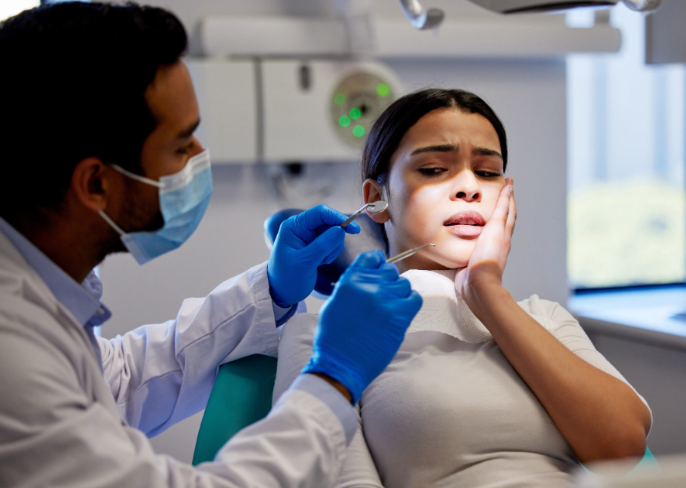
Dental emergencies seldom introduce themselves gently. One minute everything is great, and the next there is a shattered molar, a swollen jaw, or a tooth lying in the palm of a hand after a tumble. What most individuals do not know in that time is that the judgements made in the next hour have more weight than anything a dentist can accomplish days later. For Central Coast residents, having dependable access toemergency dental care in Gosford is not only about convenience — it is about protecting teeth and tissue that just cannot wait for a normal planned session.
Pain That Pulses Has a Reason
Not every tooth pain operates the same way, and the pattern tells you quite a lot. Dull, generalised sensitivity is one thing. Pain that throbs in sync with the heartbeat is something else — it typically signifies pressure is accumulating inside a limited area, most frequently from infection or inflammation sitting at the root tip. That type of suffering does not level off. It builds slowly, frequently peaking at night when reclining down pushes blood pressure towards the head. By the time apparent swelling emerges on the cheek or jaw, the infection has already gone well beyond the tooth itself.
The Abscess People Ignore
A dental abscess is one of the more genuinely dangerous things that can quietly develop inside the mouth. People routinely treat it as something to manage with painkillers until a convenient appointment opens up. The infection does not wait for that appointment, though. It travels through soft tissue, along fascial planes, and in serious cases into the neck and the floor of the mouth. What begins as a single infected tooth can escalate in a direction that goes far beyond dentistry. Emergency dental care in Gosford exists precisely because these situations cannot be safely triaged onto a waiting list and left there.
What Happens to a Knocked-Out Tooth
The biology involved in reimplanting a tooth is surprisingly specific, and most people get the immediate response wrong. The periodontal ligament fibres on the root surface need to stay alive for reattachment to have any chance of working. Tap water destroys those cells through osmotic pressure — it feels like the logical thing to reach for, but it actively causes harm. Milk preserves the cells adequately. Saline is better still. Keeping the tooth in the socket itself, if the patient can manage it, is the most effective option of all. Emergency dental care in Gosford can successfully reimplant a knocked-out tooth, but the condition it arrives in makes an enormous difference to whether that succeeds.
Cracks That Hide in Plain Sight
A cracked tooth does not always announce itself with immediate pain. Some cracks run vertically through the root in a way that only produces a sharp sensation when biting at one particular angle – then disappears completely. People assume they caught something hard in their food and think nothing more of it. Weeks pass. The crack works its way deeper, bacteria settle into the gap, and what might have been a straightforward crown has quietly become a root canal, or in worse cases, an extraction. Cracks identified early can frequently be stabilised. Left alone, they almost never resolve by themselves.
After-Hours Access Is the Real Test
A dental practice that lists emergency care but only operates during standard weekday hours is not really offering much in a crisis. Emergencies do not check the calendar first. The honest question to ask about any clinic is not whether the phrase appears on their website — it is whether a qualified person actually picks up the phone on a Sunday evening. On-site imaging matters just as much. Treating dental trauma or infection without X-rays means working from guesswork, and guesswork affects both the diagnosis and whatever treatment follows.
Conclusion
Dental emergencies compress time in a way that routine problems simply do not. The difference between a tooth that can be saved and one that cannot is often measured in hours. Emergency dental care in Gosford gives Central Coast residents a genuine fighting chance when something goes wrong without warning — not just temporary pain relief, but proper clinical intervention that actually addresses the cause. Understanding that acting quickly changes real outcomes, and knowing exactly where to go before a crisis ever arrives, is the kind of preparation that is very easy to overlook until it suddenly becomes urgent.